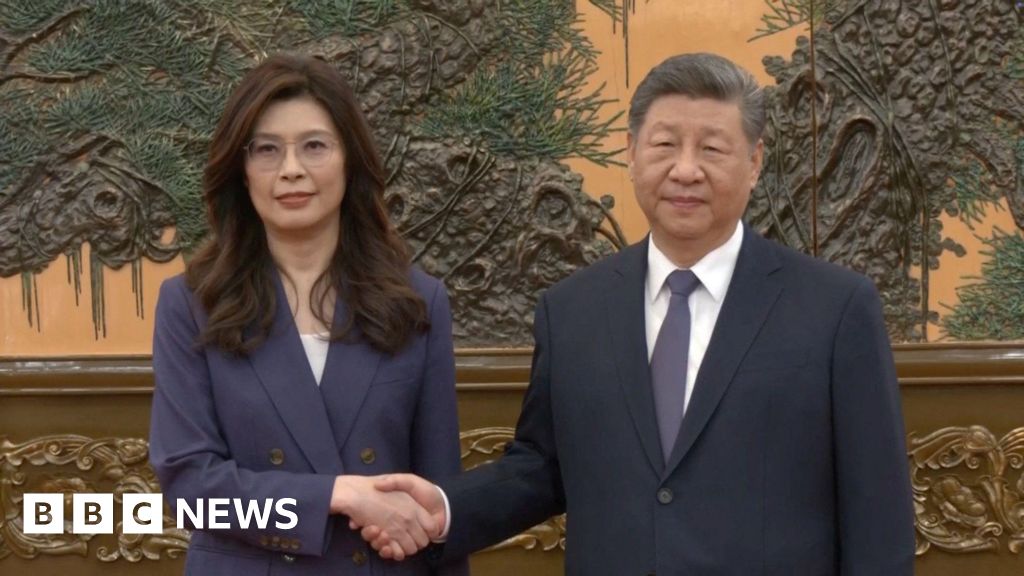
Xi Jinping Meets Cheng Li-wun: Unpacking the Dialogue on One China, 1992 Consensus, and Taiwan's Future
In a diplomatic overture watched closely by capitals worldwide, Chinese President Xi Jinping recently hosted Cheng Li-wun, the leader of Taiwan's main opposition party, the Kuomintang (KMT), in Beijing. This rare high-level meeting, the first between an incumbent KMT chairperson and a Chinese president in a decade, aimed to address the increasingly fraught cross-strait relations. Framed by Cheng Li-wun as a "visit for peace," the dialogue between Cheng Li-wun Xi Jinping sought to re-emphasize channels for cross-strait stability amidst geopolitical tensions.
The meeting comes at a critical juncture, with Beijing having severed high-level communications with Taiwan following the election of the Democratic Progressive Party's (DPP) Tsai Ing-wen in 2016, and more recently, Lai Ching-te. China cited their refusal to endorse the "one China" concept as the reason. This context amplifies the significance of Cheng's engagement, positioning the KMT as a potential bridge for dialogue, albeit one walking a delicate tightrope between domestic expectations and Beijing's firm stance on sovereignty.
Dialogue for Peace: Xi's Stance and Cheng's Aspirations
The highly anticipated encounter unfolded in Beijing's iconic Great Hall of the People. President Xi Jinping, addressing Cheng Li-wun, articulated a clear vision for the future of cross-strait relations. He stressed the shared objective of "safeguarding the peace and stability of our shared homeland" and promoting the peaceful development of relations to ensure a "bright and beautiful future" for future generations. Crucially, Xi reiterated China's willingness to strengthen dialogue with various parties, including the KMT, on the explicit condition of "opposing Taiwan independence." He underscored the belief that "those on both sides of the Taiwan Strait are Chinese," and that peace is a universal desire.
Cheng Li-wun's response echoed sentiments of shared heritage and aspiration. She affirmed that the "rejuvenation of the Chinese people is a shared aspiration of the people on both sides of the Strait," framing this common goal as a "positive contribution to world peace and human progress." For the KMT, which has historically maintained warmer ties with Beijing compared to the DPP, this meeting was a strategic move to position itself as a responsible actor capable of de-escalating tensions and fostering stability. It reflects a tactical shift, with some analysts noting Cheng's more direct approach compared to her predecessors' cautious engagements.
Understanding the implications of such high-level exchanges is crucial for anyone following East Asian politics. For deeper insights into the KMT's strategic approach and Cheng's role, read Cheng Li-wun & Xi Jinping: KMT's Peace Bridge for Cross-Strait Stability.
The 1992 Consensus: A Cornerstone, or a Contention?
At the heart of the dialogue, and indeed, a central pillar of cross-strait interactions since the early 1990s, is the "1992 Consensus." Cheng Li-wun, in a press conference following her closed-door meeting with President Xi, emphatically stated that maintaining the 1992 Consensus and opposing Taiwan independence is a way to "avoid war, prevent tragedy, work together and create peace."
So, what exactly is the 1992 Consensus? It's an understanding reached between the then-ruling KMT and the Chinese Communist Party (CCP) that there is "one China," while allowing for differing interpretations of what "one China" means. For the KMT, this traditionally implies the Republic of China (Taiwan's official name), while for the CCP, it means the People's Republic of China. This diplomatic ambiguity has historically provided a basis for dialogue and a certain degree of stability, acting as a political prerequisite for official cross-strait exchanges.
However, the 1992 Consensus remains highly contentious within Taiwan. The ruling DPP has consistently rejected it, arguing that it undermines Taiwan's sovereignty and ignores the democratic will of its people. They view it as a concession that implicitly accepts Beijing's claim over Taiwan. This fundamental disagreement is why Beijing refuses formal dialogue with the DPP leadership, including current President Lai Ching-te, whom they label a "separatist" and "troublemaker." President Lai has, however, repeatedly committed to maintaining the status quo in cross-strait relations, neither seeking unification nor formal independence.
Practical Insight: The differing interpretations of the 1992 Consensus highlight the deep political chasm across the Strait. While the KMT views it as a pragmatic tool for peace, the DPP sees it as a threat to Taiwan's self-determination. Understanding this dichotomy is essential to grasp the complexities of Taiwan's political landscape.
Taiwan's Internal Dynamics and International Implications
Cheng Li-wun's visit, while lauded by some as a courageous move for peace, has not been without significant criticism back home. The DPP and its supporters have accused Cheng and the KMT of being "subservient" to Beijing and undermining Taiwan's sovereignty by engaging with a regime that openly threatens the island. This internal political friction underscores the profound challenge of navigating cross-strait relations.
The KMT's traditional platform emphasizes closer ties with China, believing that dialogue and economic engagement are the most effective ways to ensure peace and prosperity for Taiwan. However, public sentiment in Taiwan is complex. While many Taiwanese citizens prioritize maintaining the "status quo"—neither formal independence nor unification—a significant majority identify themselves as Taiwanese, not Chinese, and cherish their democratic way of life. This means that any political party seeking to engage Beijing must carefully balance the pursuit of peace with the protection of Taiwan's distinct identity and democratic values.
From an international perspective, the meeting between Cheng Li-wun Xi Jinping offers a brief glimpse into potential alternative pathways for dialogue, even as official channels remain frozen. It provides an avenue for Beijing to signal its willingness to engage with non-DPP political forces in Taiwan, while simultaneously reinforcing its "one China" principle. Global powers will be watching to see if this KMT-led initiative can genuinely de-escalate tensions or if it merely serves to highlight the deep divisions within Taiwan itself regarding its future trajectory.
To understand the criticisms and internal debates surrounding such high-level visits, explore Cheng Li-wun's China Trip: Taiwan's KMT Navigates Peace Amid Criticism.
Looking Ahead: Navigating a Complex Future
The meeting between Cheng Li-wun Xi Jinping serves as a poignant reminder of the enduring complexities of cross-strait relations. While Cheng Li-wun has positioned herself as a "bridge for peace," the success of this bridge ultimately hinges on bridging the fundamental disagreements over Taiwan's sovereignty and future.
For Taiwan, the challenge lies in finding a path that ensures security and economic prosperity while upholding its democratic values and self-determination. For China, the insistence on the "one China" principle and the potential use of force continue to be major sources of international concern and regional instability. The KMT's engagement, while offering a glimmer of dialogue, must contend with a Taiwanese public that increasingly values its distinct identity and fears Beijing's coercive actions.
Actionable Advice: Observers of cross-strait dynamics should monitor not just the high-level pronouncements, but also the reactions within Taiwan's diverse political landscape. The strength of Taiwan's democracy lies in its vibrant public debate, which will continue to shape how any agreements or understandings from such meetings are perceived and implemented.
Conclusion
The meeting between Chinese President Xi Jinping and KMT leader Cheng Li-wun marks a significant, albeit complex, moment in cross-strait relations. It underscores the KMT's enduring commitment to dialogue with Beijing based on the 1992 Consensus and opposing Taiwan independence, contrasting sharply with the ruling DPP's stance. While the meeting was presented as an effort to safeguard peace and promote stability, it also highlighted the deep-seated political divisions within Taiwan and the unyielding nature of Beijing's "one China" policy. The road to lasting peace and stable relations across the Taiwan Strait remains long and fraught with challenges, requiring careful diplomacy, mutual understanding, and respect for the diverse aspirations of the people on both sides.